About SRT
The Seal Research Trust (SRT) is an internationally renowned multi award winning, citizen science, evidence based marine conservation charity.
SRT aims to passionately protect precious marine habitats and species within and beyond Cornwall.
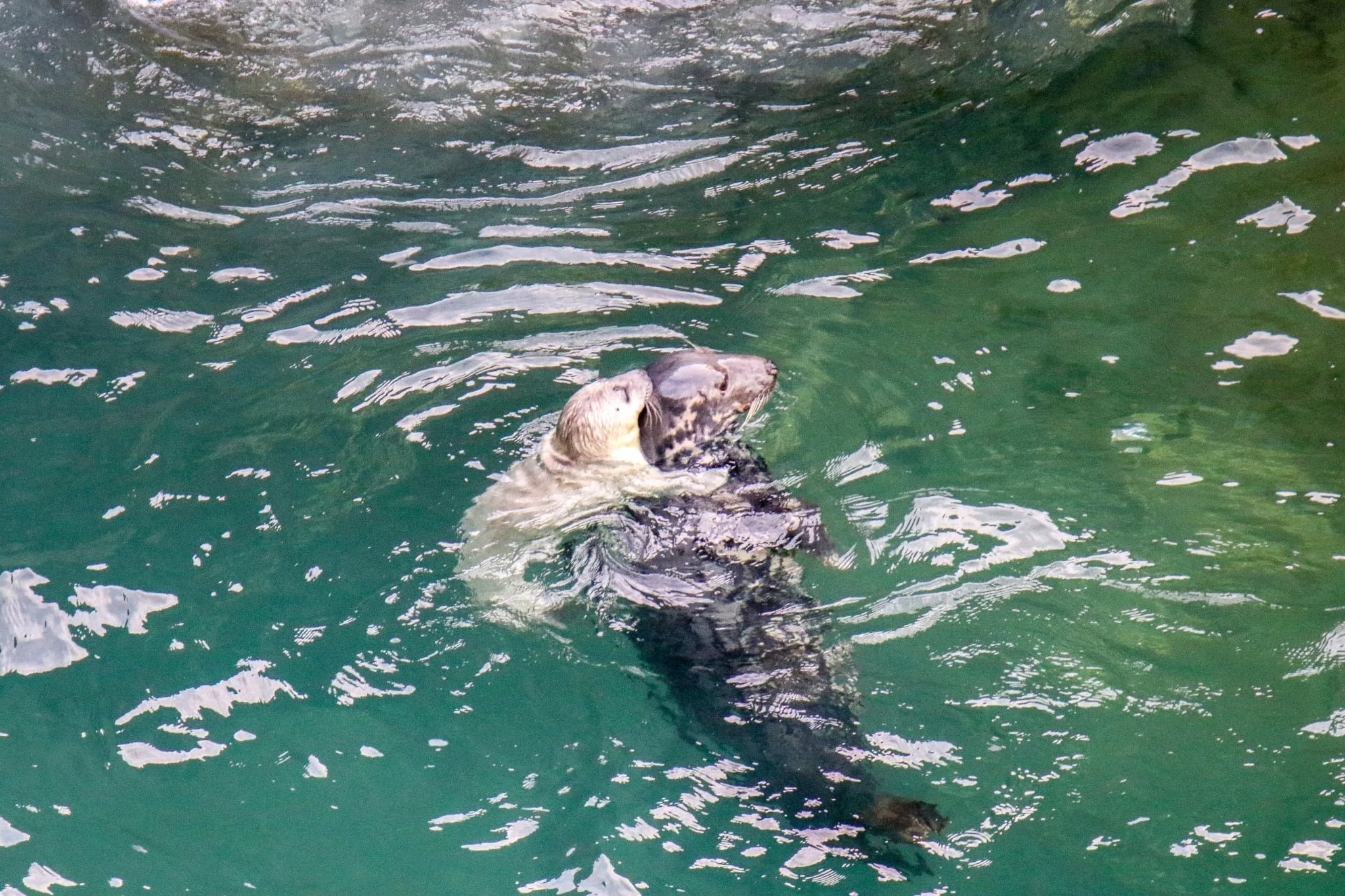
SRT’s philosophy is inspired by the Ecozoic and is all about ‘sharing our seas successfully’. SRT’s Founder and Director Sue Sayer has an MBE for services to Wildlife Protection and Conservation. For over 25 years, SRT volunteers have spent thousands of hours observing seals in the wild from land and at sea in Cornwall. To SRT there is no such thing as an average seal. Each one looks different, has an individual personality, range of habits and migration route around the Celtic Sea!
Pioneering, long term, citizen science Photo ID work on individual seal fur patterns enables SRT’s volunteer team to build up stories about each seal’s unique life experience in the wild Atlantic Ocean.
SRT survey multiple aspects of the marine environment and use the resulting data to champion the protection of marine ecosystems, given seal and human survival depend upon thriving and resilient oceans.
Lots of photos for you to use copyright free can be found here >>
Team Seal
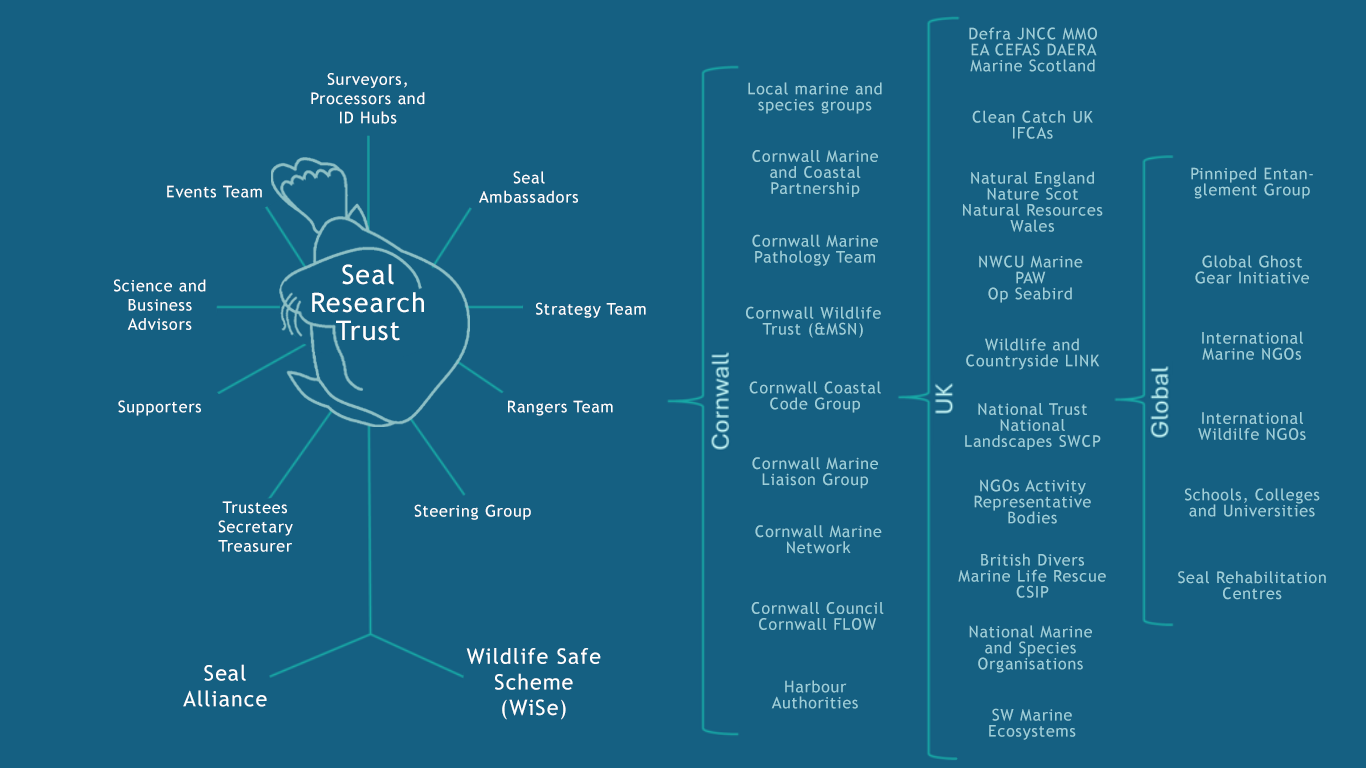
At SRT we have wonderful Trustees who are responsible for governing and managing our charity. They ensure we stay focused on our priority to ‘help people to help seals’ and that we remain resilient to support and conserve seals over the long term.
All our Trustees are volunteers and currently include Sue Sayer MBE (Founder and Director); Kate Hockley and Dan Jarvis (Vice Chairs) alongside Phil Knight and Richard Morton. Sue, Kate and Dan form our ongoing Steering Group who meet regularly to make key day to day decisions and represent the charity in public consultations relevant to the marine ecosystem and seals.
Supporting SRT’s Trustees are our voluntary Secretary Jeremy Gilson and Treasurer Lesley Fitt who both give generously of their time to ensure SRT function effectively and comply with relevant charity legislation.
It has been an honour to be supported by Bex Allen as our voluntary Scientific Advisor for over a decade. We routinely consult with experts on a range of other relevant issues as they arise. Most recently this has been geoengineering. We owe a huge debt of gratitude to Dr Ian Hendy and Dr David Santillo for providing invaluable advice and practical support when we needed it most. Additionally, we have been privileged to have received advice over the years from pro bono Business Advisors.
All SRT’s volunteers are multi-talented with a huge range of knowledge and skills. SRT aim to upskill and empower all volunteers to be as active and involved in charity conservation efforts as possible across the UK and beyond. This enables SRT to achieve more outcomes with increased efficacy. As a result, SRT have a range of varied teams focused on different aspects of our work (such as Strategy, Events and Seal Ambassadors).
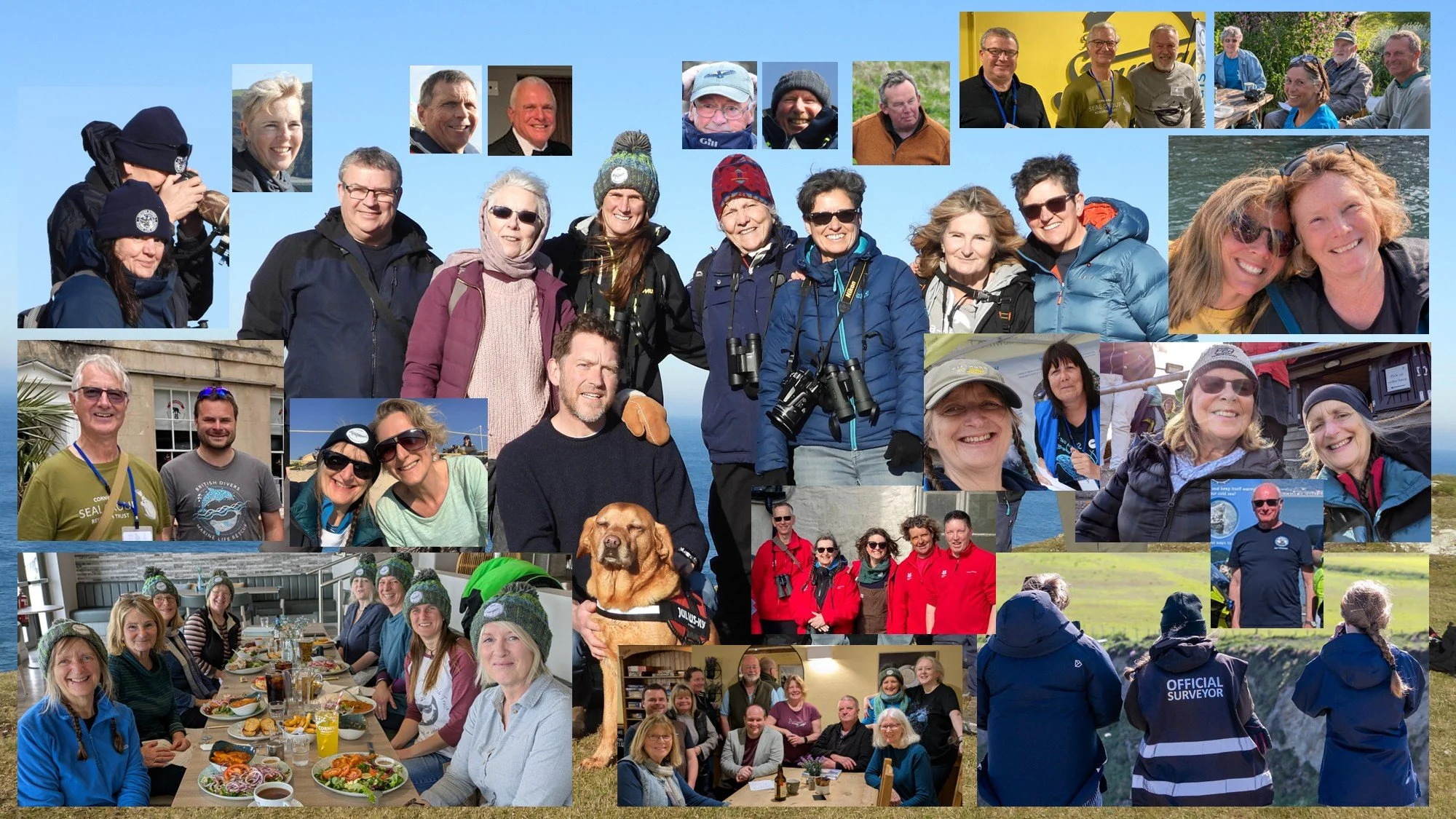
Fundamentally, we rely on stalwart volunteer surveyors who are out in all weathers routinely collecting vital data. Often processed by remote volunteers, their photos and information are collated for dissemination. Of course we rely on our hugely talented Photo ID Hub teams, coordinated by our incredible volunteer Kate Williams. Results can then be shown to decision makers in policy and planning to illustrate the issues seals are currently facing in the wild, giving our native, heritage, speciality UK seals the voice they deserve.
Equally vital are our SRT Supporters who are interested in a multiple aspects of our work such as fundraising (currently led by Hayley Mitchell); learning more about our charismatic seals to apply wherever they are; corporate and personal sponsors, as well as those who have adopted one of our wild seals in perpetuity or for a fixed period of time. Legacies make a huge difference to SRT’s financial sustainability, which is vital for us to have a long term future supporting marine conservation work with seals.
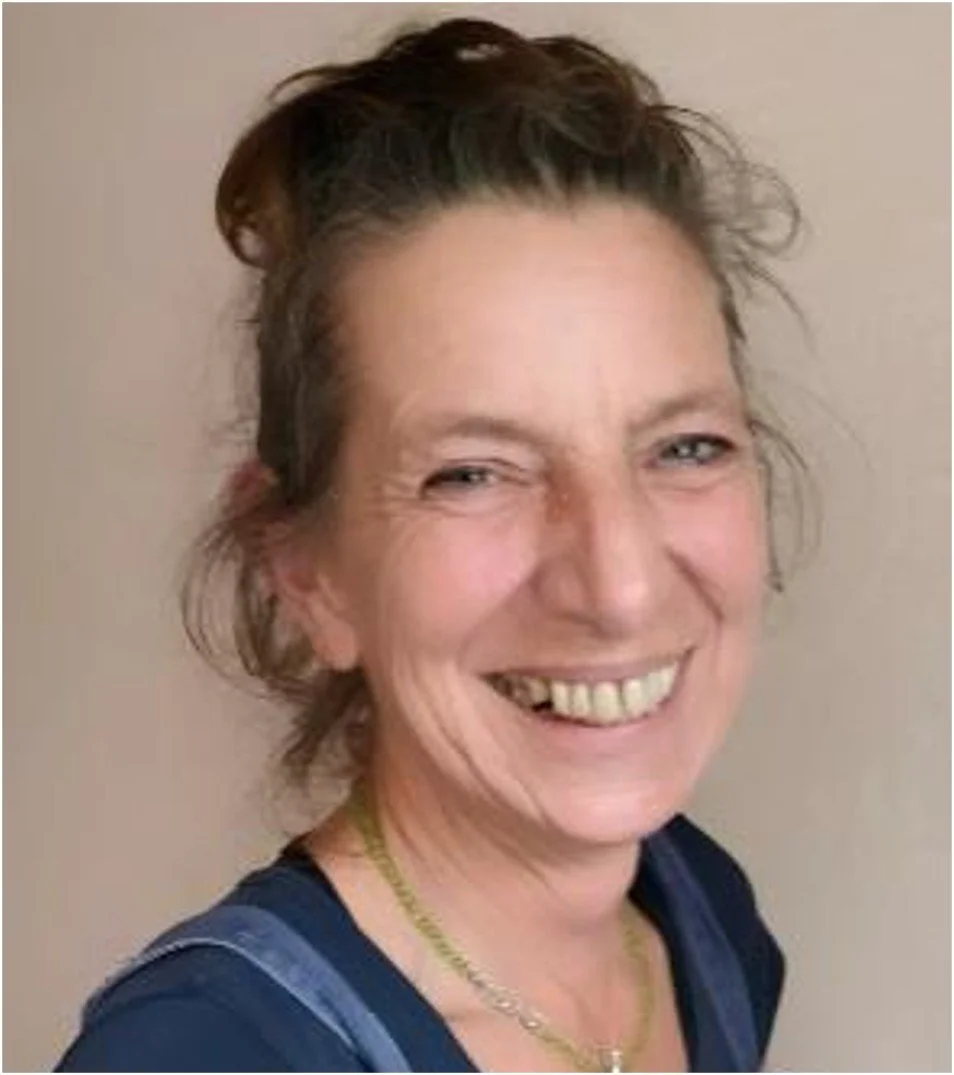
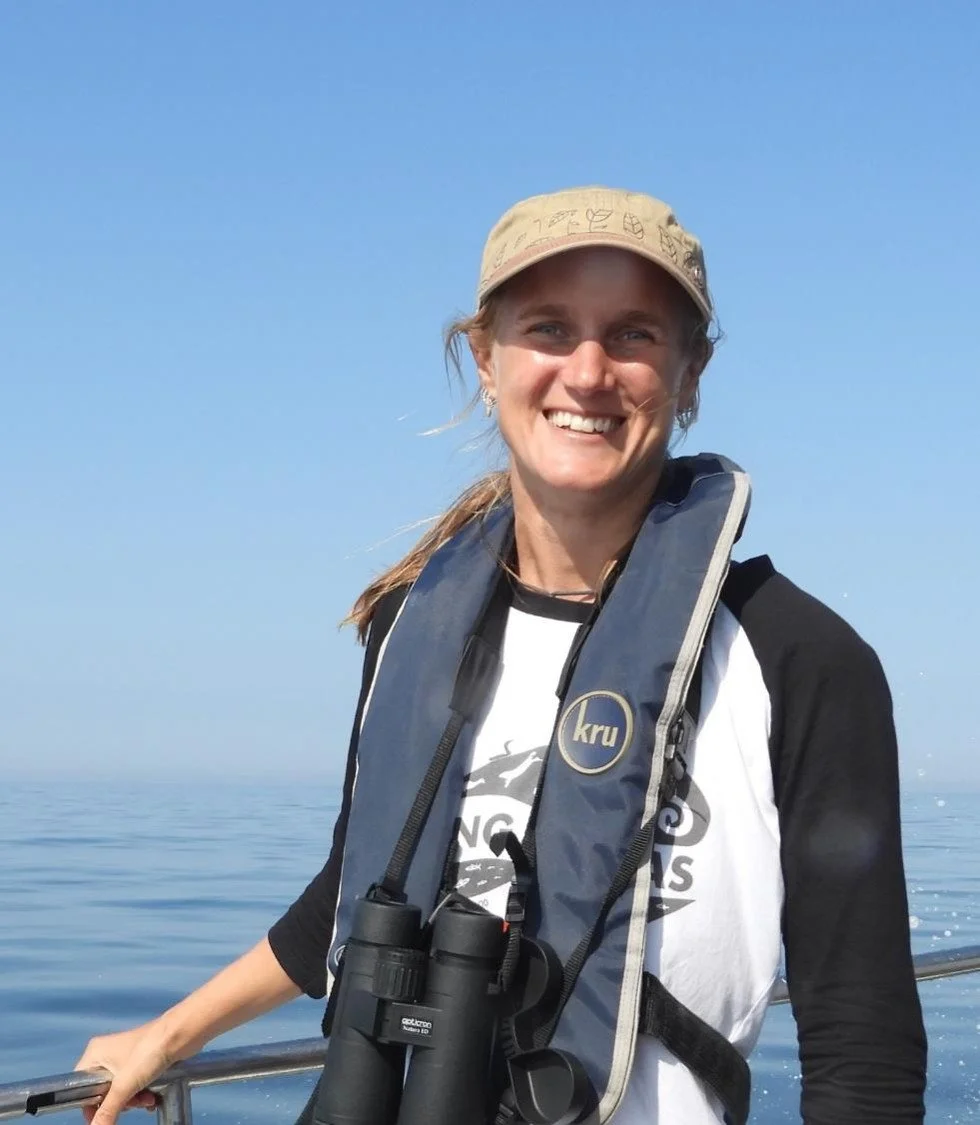
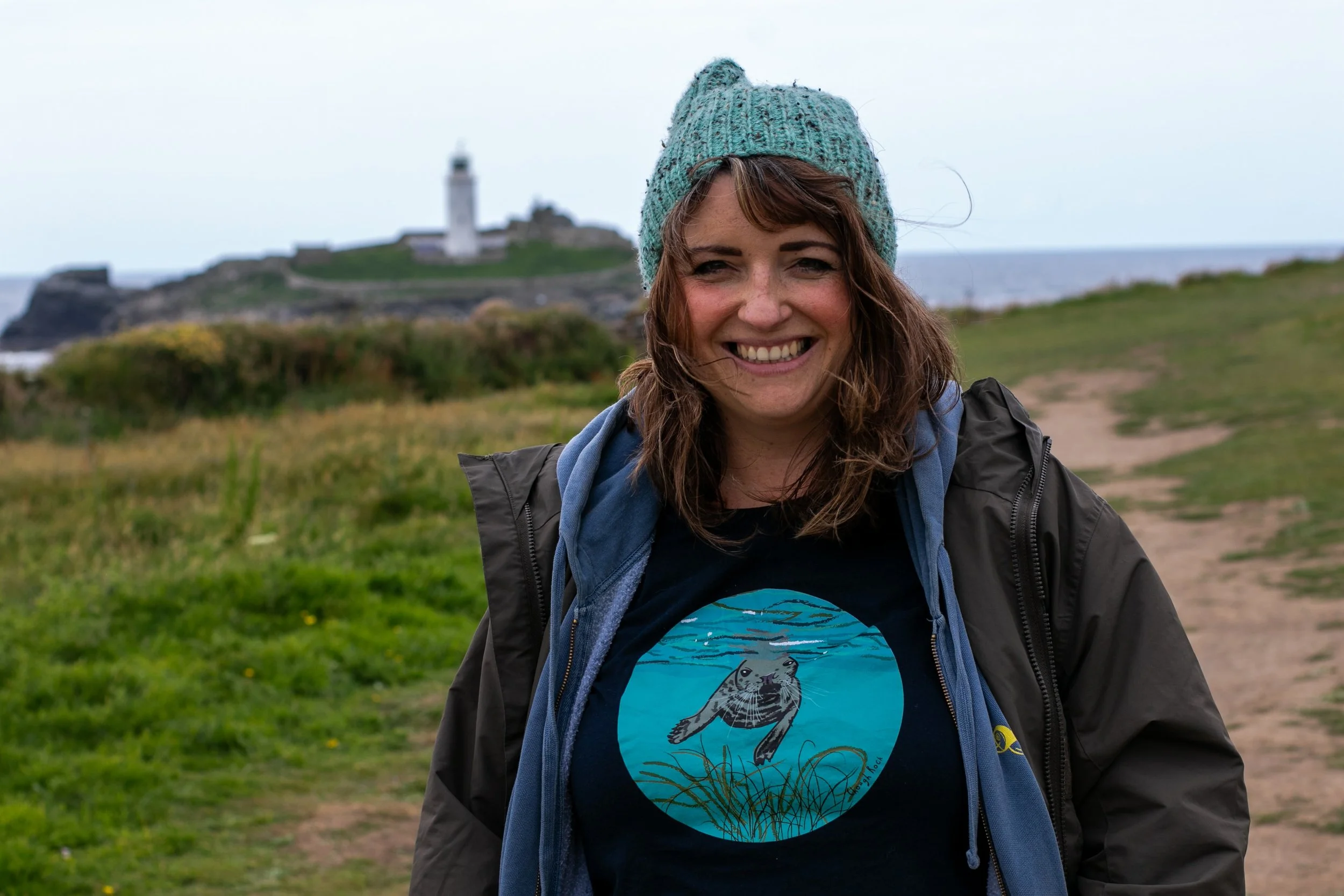
Completing the internal team, to manage key aspects of our work, are our wonderfully passionate Rangers. All are part time and on average work an equivalent of around two days full time equivalent a week. Currently our Rangers are Lauren McGregor (Creative Office); Niki Groves (Administration); Milly (Research); Karen (Retail and Administration); Sarah (Sanctuaries at Sea) and Zoe (Digital).
SRT are limited in what we can achieve in isolation, so we have learned that partnership is crucial to spread our influence and break beyond our beautiful seal bubble. This is why we have built up a huge network of partners across the southwest, UK and globally, with whom we have mutually beneficial and reciprocal themes.
Huge thanks to each and every one of you who have progressed our ability to influence others to help seals and share our seas more successfully.
Meet Sue Sayer MBE – Founder & Director of SRT
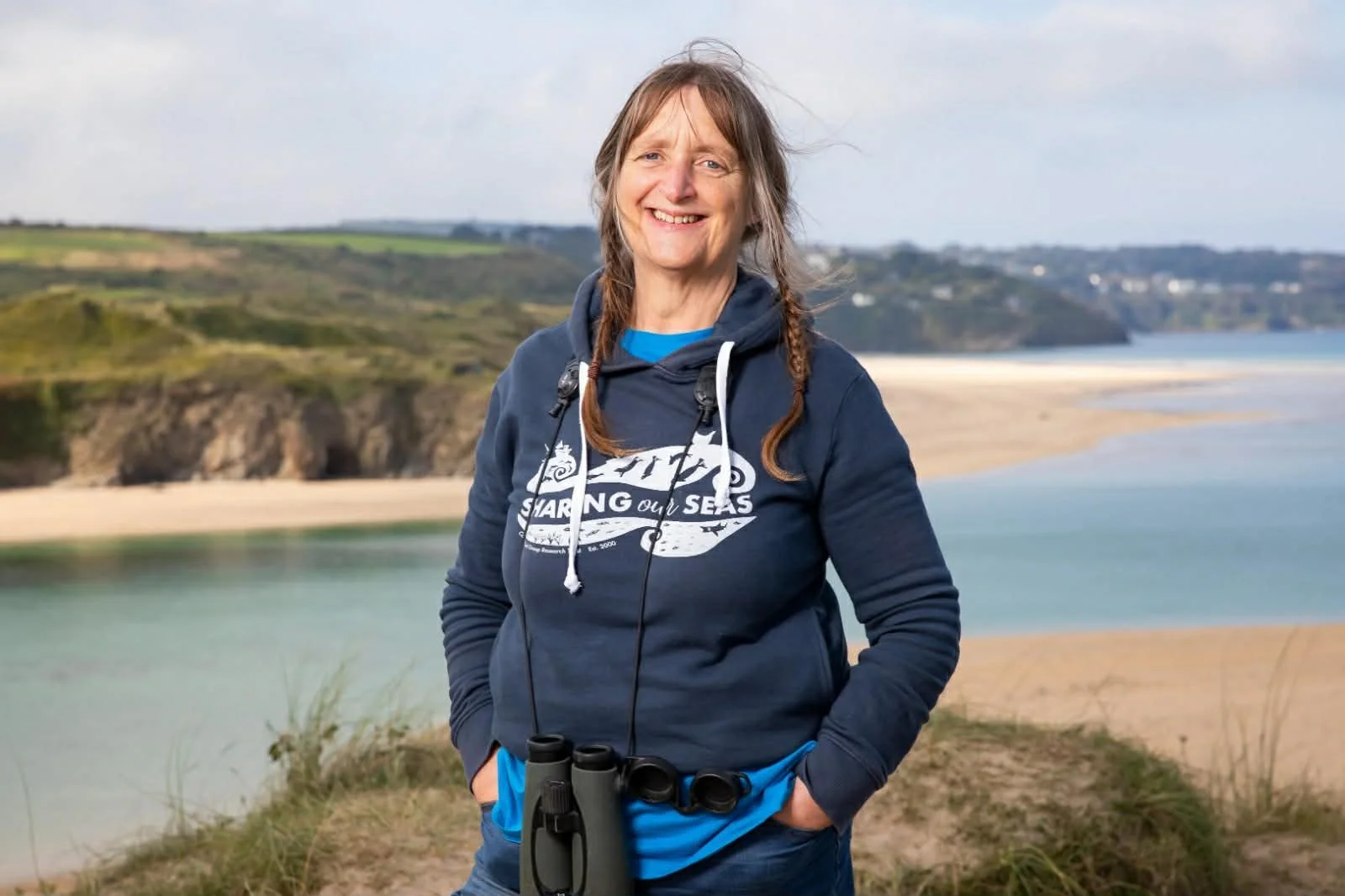
Sue Sayer is an internationally renowned seal researcher and author.
Previously a Secondary School Middle Manager in multiple roles, an Advanced Skills Teacher and ‘Classroom of the Future’ Director, Sue won a Cornwall Council ‘Innovation and Improvement’ award whilst managing 6 figure budgets effectively. As SRT’s Founder and Director since 2000, Sue has considerable experience in professionally managing and delivering successful contracted projects for a range of statutory agencies and other organisations including the Area of Outstanding Natural Beauty (x3), Natural England (x3) and Wave Hub (x3). She successfully line managed all aspects of a People’s Postcode Lottery Postcode Local Trust grants (x2), a TEVI grant, two Heritage Lottery Fund grants and most recently a grant from Defra’s Green Recovery Challenge Fund administered by the National Lottery Heritage Fund.
Sue is the author of Seal Secrets and has contributed to multiple scientific papers on seal behaviour, rehabilitation, entanglement and marine pollution. A confident public speaker, she regularly presents at conferences and events across the UK and internationally.
Her contributions to marine wildlife conservation have been widely recognised, including multiple regional awards and the award of an MBE in 2023 for services to wildlife protection and conservation. Sue is also a WiSe Scheme Trainer, specialising in seals and seabirds, and an Associate Tutor for the Field Studies Council.
Passionate about the future of marine conservation, Sue is committed to mentoring the next generation of conservation leaders and protecting the long-term health of our oceans.

Thank you to our current funders for paying our critical 2fte Marine Rangers
•
Thank you to our current funders for paying our critical 2fte Marine Rangers •
What we do
Campaigns
SRT have been using their unique data set to inform government about the multiple issues that seals are facing out in the wild. Grey seals face a wide range of impacts both from environmental and anthropogenic sources:
Bycatch and entanglement in operational and lost fishing gear;
Climate change impacts on seals: Warming seas affecting prey distribution; Extreme weather events inundating pupping beaches separating maternally dependent pups; Reducing fecundity following year; Groundswells increasing lost gear increasing entanglement rates; Groundswells disturbing pollutants and contaminants locked in the seabed; Ocean acidification; Toxic algal blooms (domoic acid); Rising sea levels flooding sea caves and haul outs; Increasing rates of coastal erosion with rockfalls injuring or killing seals; Heavy rain increasing disturbance.
Disturbance by increasing coastal human activity from land, sea and air;
Fish stocks being depleted, changing and shifting;
Habitat loss through coastal squeeze and increasing marine activity;
Persecution using variety of fatal and debilitating actions;
Pollution in the form of light and sound as well as physical (macro and micro) and chemical outflows ranging from industrial, agricultural, transportational and household activities including emerging issues such as pharmaceutical runoff (e.g. painkillers and hormones);
Marine carbon dioxide removal geoengineering projects.
Disturbance
The easiest of these issues to solve is that of human disturbance as this usually happens as a result of a lack of public awareness about how best to act around wild seals in their natural environment. This is completely understandable, so SRT’s main long term campaign has been to share key information and advice about how we can all help seals stay relaxed and happy in their natural environment. As part of SRT’s Disturbance Campaign, we:
Provide free talks, resources in the form of public signs, leaflets and stickers about what seals need from us around the UK coasts and beyond. These are shared at multiple public events run by partner organisations
Work with a range of different activity Governing Bodies to enable them to create their own resources from the free information we provide that can be shared in person or via multiple online forums
Partner with local landowners to help give them the advice and information needed to manage people at their sites around seals to minimise the impact we all have. This helps landowners to put up fencing, create paths and interpretation signage to raise visitor interest, awareness and knowledge about our incredible seals. We help landowners to recruit, train and support volunteers to engage with site visitors to enhance their experience of seeing seals in the wild, as well as appreciate all the other incredible nature at these sites
Support local marine conservation groups to explore and action at sea management schemes such as awareness raising buoys 100m away from sensitive seal sites
Share summary data about the disturbance our wild seals are experiencing throughout the year with statutory agencies to encourage them to better understand how serious this issue is. Ultimately we hope this will provide the evidence needed for them to take action to better protect our seals when they are most vulnerable on land
Write to statutory agencies and government representatives at all levels to ensure that when people do occasionally deliberately and knowingly disturbance seals then there is legal protection for them. SRT’s have been campaigning for a long time to get seals added to the Wildlife and Countryside Act Schedule 5 all Section 9 Offences. This was recommended by the Joint Nature Conservation Council in 2022 and by the EFRA Marine Mammal Inquiry in 2023. We have everything crossed that this will happen soon.
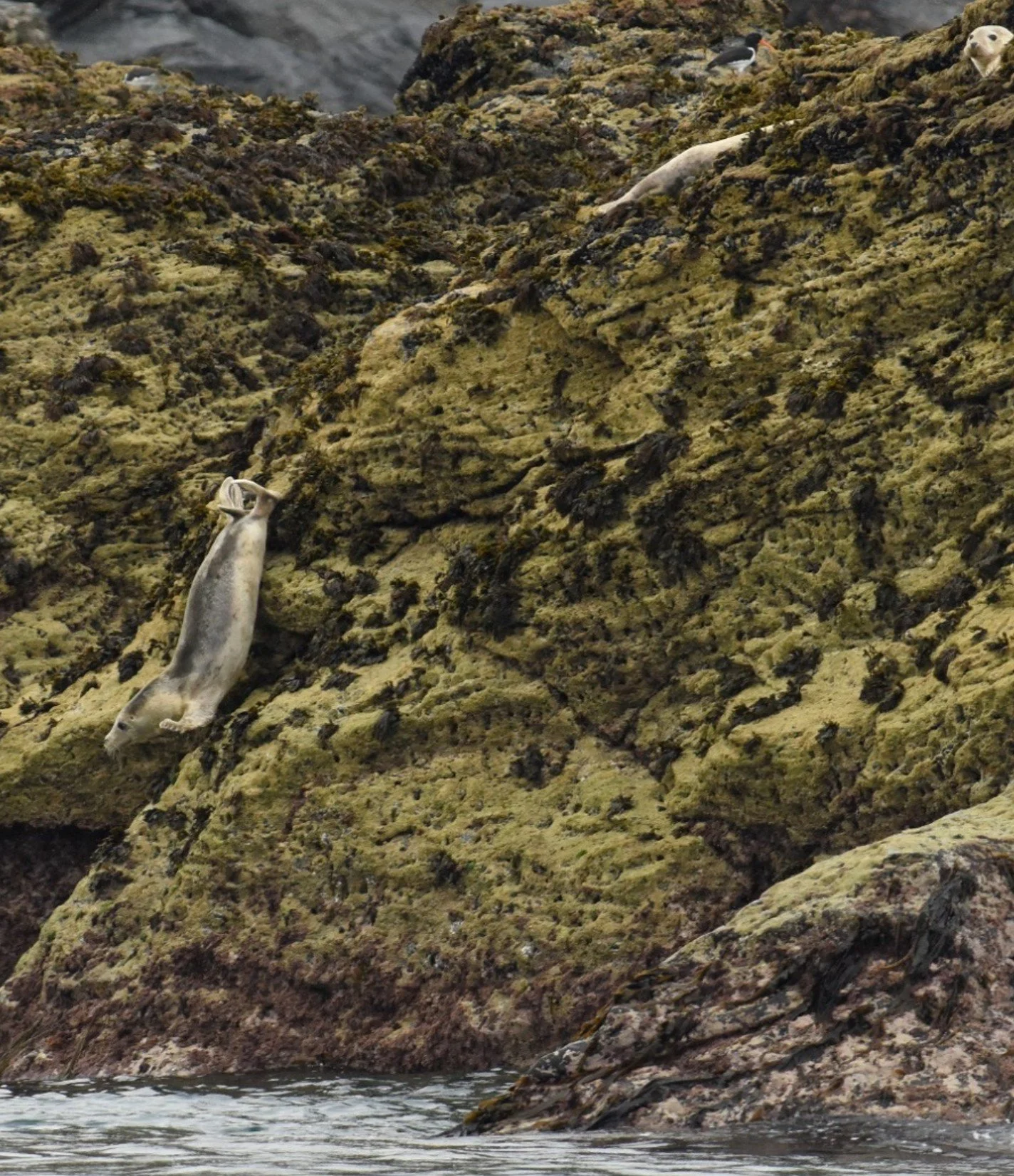
This juvenile seal has been spooked into tombstoning into the sea. She will likely swim off, but have broken rib bones as a result. These can never heal as a seal’s rib cage collapses under pressure when it dives, so this poor seal will likely die a slow and painful death from starvation.
Plastic debris
Another way of making our seas safer for seals is to reduce the amount of plastic debris floating around in our oceans. Over the years SRT has led on research to survey:
Lost fishing gear
Incredibly SRT completed 4 years of lost fishing gear surveys right around the SW coast. Not only did volunteers record lost fishing gear but they removed it too. Data on the type of lost gear, the amount, the level of risk it posed and the direct impacts of entanglement it was having on seals were all recorded and shared in annual reports which have been shared with multiple agencies to show the shocking and widespread impacts this debris has on multiple species from seals to seabirds, mussels and pink sea fans.
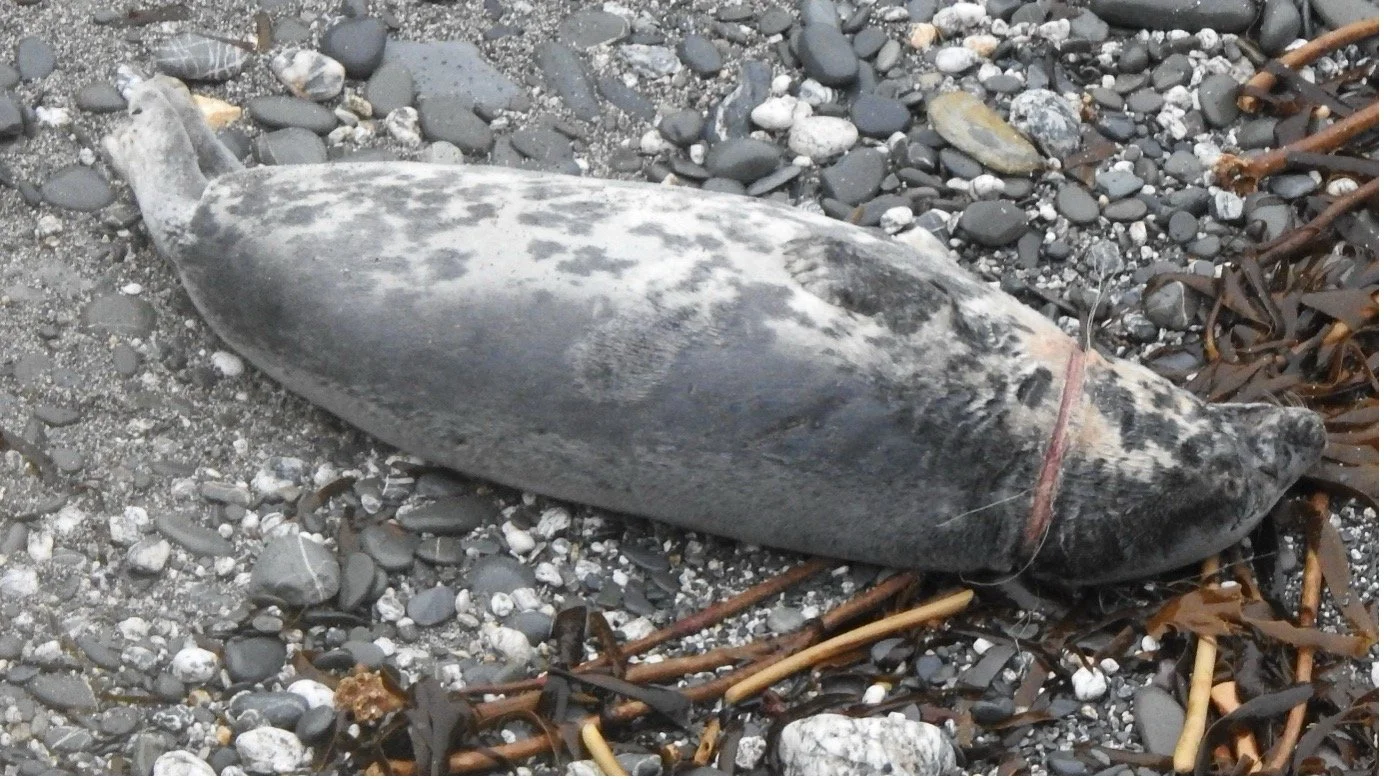
This is adult female Legs three weeks after getting a single strand of monofilament gill net caught around her neck back in 2019. Sadly SRT and BDMLR have not been able to rescue her and she is still alive with a hideous open wounds and lesions. Fingers crossed on day she will be in an inaccessible place to make her rescue possible.
Flying rings
Over 34 different seals have been recorded around the UK caught up in flying ring toys. Once over a seal’s head, the ring gets pushed back by water resistance as the seal swims and when the seal elongates and stretches its neck to snatch prey, the ring gets tighter and tighter on its neck. Within just two weeks a flying ring can be so tight on a seal’s neck that it cannot be pulled off but rather has to be cut off with bolt cutters. SRT are not about stopping anyone having fund on their beaches so, along with the Seal Alliance, SRT have been asking people to switch from flying ring toys back to solid disc alternative, preferably plastic free ones.
As part of this campaign, our incredible volunteers have been taking to retailers about switching to selling sold discs and writing to councillors asking them to vote for voluntary bans on their sale and use across the county of Cornwall. We were delighted when our wonderful Cornwall Councillors voted unanimously for a voluntary ban here.
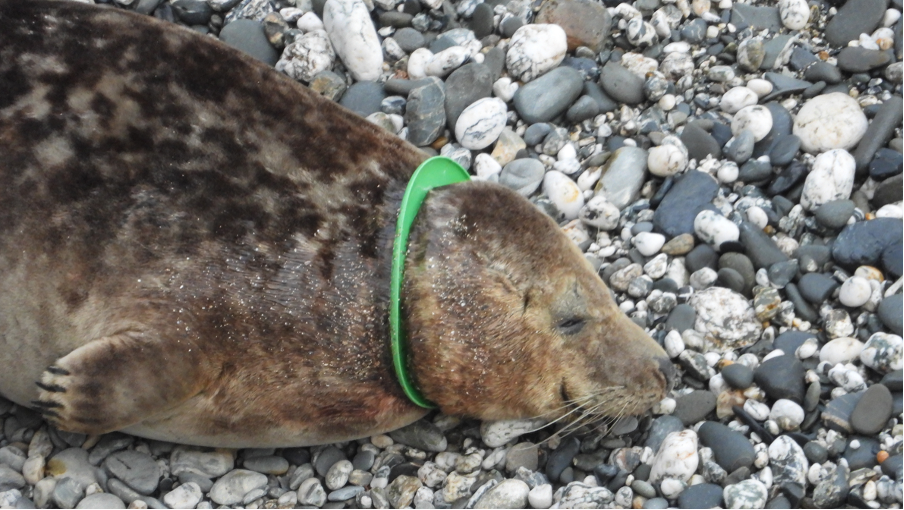
JD was recorded by an SRT volunteer caught up in a flying ring. SRT alerted BDMLR who thankfully were able to capture and immobilise his as they cut the ring away from his neck.
Industrial rings
A new and emerging threat is appearing as our volunteers have begun recording seals in plastic rings from other sources that include gaskets, offshore wind installations and pain tin seals.
Climate Change
Our long term data sets are vital for highlighting trends and changes in the way seals interact with their environment. Shifts began in 2016, when our peak haul out seasons shifted from March/April back to December/January. SRT used to record most pups born in October followed by November and since 2016, this has been September followed by August. As we think these changes are most likely linked to climate change, SRT have been working hard to help their volunteers, supporters and the public to minimise their carbon footprints to help seals and ultimately future generation of people on our planet. This this end, SRT have:
Designed and created a Sea Change: Seals leaflet to raise awareness about the stories seals are bringing about the state of our seas to us to on land
Filmed, edited and shared two versions of a short film called Sea Change: Seals – one for the public with a clear call to action about the small steps we can all take to reduce our carbon emissions. The second film was aimed at rehabilitation centres and funding bodies, explaining that because of increasing cumulative marine impacts, more seals that ever are getting into trouble and so increasing amounts of rescue and rehabilitation facilities will be needed in the future. Both these films can be found on SRT’s YouTube channel.
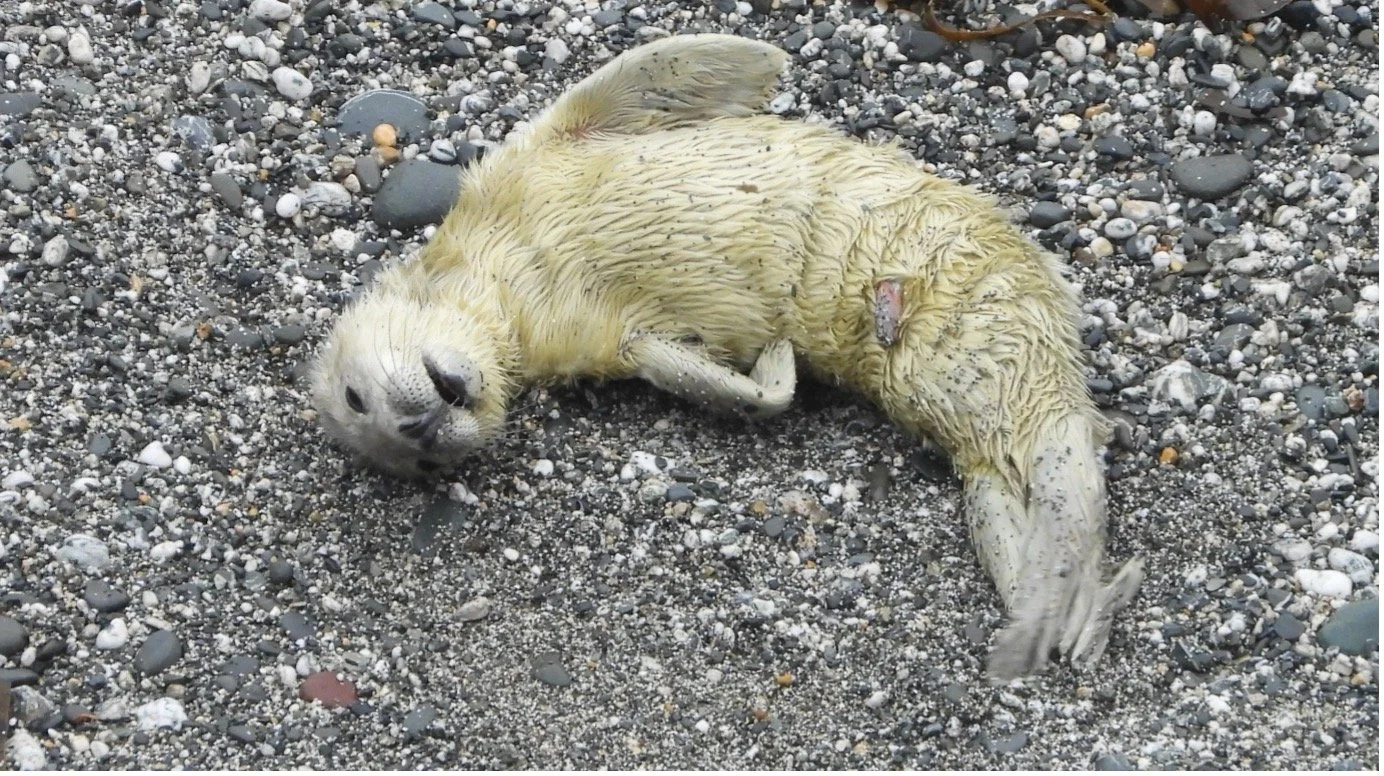
This was the second seal pup of the season, born in January so out of season. With no mother and no chance of rescue, our volunteers had the awful job of recording her suffering as she struggled for several days to survive. Will we are able to do in situations like this is to record her existence to alert policy decision makers to her plight as an indicator of the increasing effects of climate change on seals. Heartbreaking for us all.
Projects
We love working in partnership with other public, private and voluntary organisations to make the world a better place for seals. AI is the in thing, so we have two rather different project examples underway using AI:
Photo ID software to help our incredible Photo ID teams get even better at what they do – IDing even more seals and making more matches between catalogues. Thanks to partnerships with Seb East at Bristol University and Dan Schofield and Horace Lee in the University of Oxford’s Visual Geometry Department, SRT have AI tools that can snip seals from photos to save us processing time, counting tools to verify field counts and we are currently working to improve photo ID software, associated with a bespoke database
Underwater audio visual ‘Seal Spy’ passive recorders to capture underwater seal presence from their incredible vocalisations associated with video recordings of their activity and fur patterns. We are super excited to be partnering with the hugely talented and inspirational teams at Celtic Sea Power and Falmouth University to make this project possible. One day we hope that this amazing research kit can be deployed in grids across the renewable energy sector as it develops to enable non invasive ‘at sea’ density maps revealing key offshore foraging areas.
Marine Geoengineering: SRT first heard about Planetary Technologies (PTs) Marine Geoengineering Project for St Ives Bay on 19/01/23. This is a Carbon Dioxide Removal (CDR) Ocean Alkalinity Enhancement (OAE) experiment could have set a global precedent for this industry. SRT began an ongoing dialogue with the licensing authority, the Environment Agency to ensure due diligence was done. SRT’s science advisory team for the project held 3 meetings with South West Water’s Chief Operating Officer whose infrastructure was being used. A pivotal point in this project took place on 15/03/24 when the Cornwall Carbon Scrutiny Group met with 8 of PT’s staff and other stakeholders to discuss the Baseline Survey Report PT had produced. During this recorded meeting PT’s Chief Scientist Will Burt agreed with our point, admitting this wasn’t really a baseline study nor did they have an appropriate control site and that it was actually too hard, too costly, in too challenging an environment to do a proper job! A real silver lining outcome from this project has been our collaboration with Dr Ian Hendy from Portsmouth University and David Jones from Just One Ocean who have planned, led and delivered baseline dive surveys across 4 transect sites in St Ives Bay in both 2024 and 2025 to assess both the habitat and species presence, water quality and eDNA thanks to funding from the Flotilla Foundation. In April 2025, SRT discovered that PT has pulled the plug on this Geoengineering project in Cornwall for good, confirming what we already knew…that their science did not stand up to external scrutiny. SRT are funded by the Flotilla Foundation to continue with these volunteer dive surveys of St Ives Bay annually to build up a vital data set to help inform and mitigate any future developments plans for the bay.
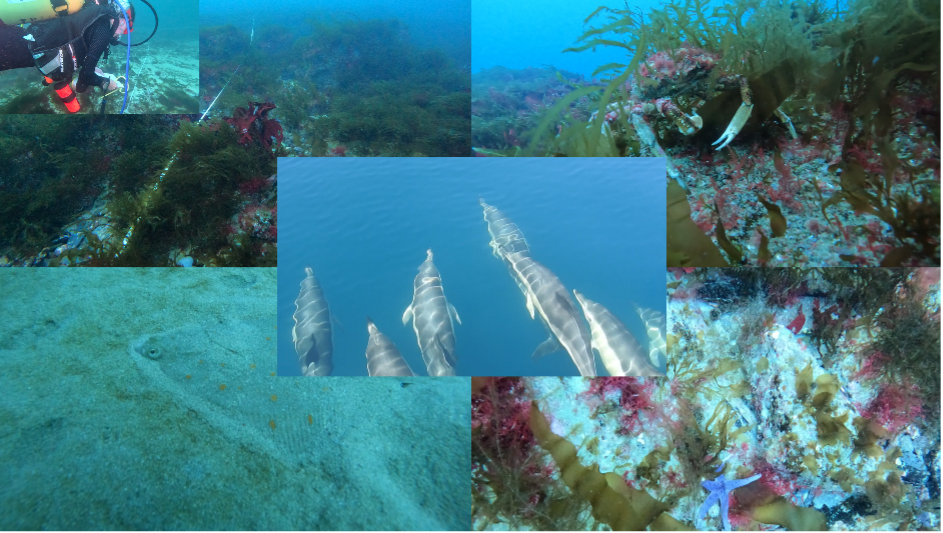
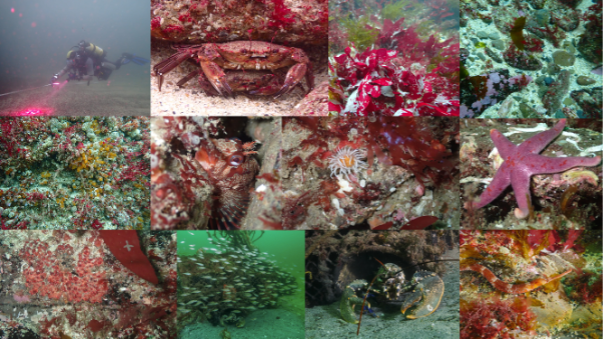
The beautiful St Ives Bay underwater habitats and species surveyed by SRT’s voluntary divers
Consultations
SRT collect seal data to inform conservation efforts. Knowledge gained from our routine surveys is collated and used to submit evidence and comments to relevant public and private consultations run by statutory agencies and other organisations on policy, developments, issues, coastal/offshore activities and nature conservation. Writing consultation submissions is the most challenging and most mundane aspect of our charity’s work but it is undoubtedly the most important thing we do. It means all the data and expertise stored in our scientific database, created by our huge volunteer team effort, is communicated to decision makers where its influence counts, helping to give seals and the marine environment a voice to make a difference in planning and policy at a national and international decision making level. All this is done monthly, during or between our monthly Steering Group Meetings. SRT are members of Wildlife and Countryside LINK (WCL), providing seal expertise to the Marine Mammal, Marine and Bycatch Groups and inputting to multiple other working groups on an ongoing basis. On average, SRT submit one consultation a week to influence policy and planning decisions.