Giving seals a voice
29/04/2024
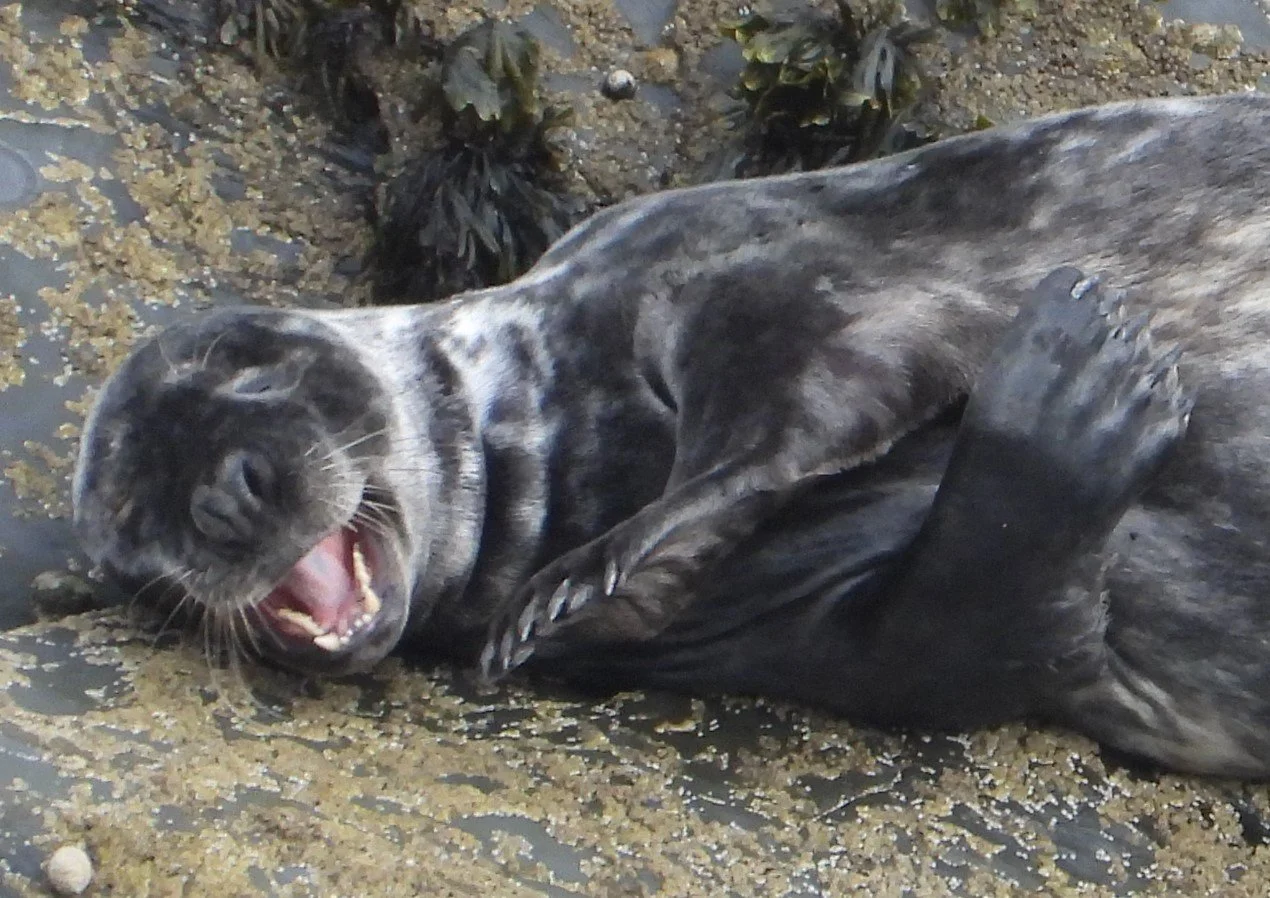
We love being out around the Cornish coastline surveying seals in their natural habitat. Watching their playful antics or sleepy stretches and yawns always makes us smile. Surveys always mean processing and this usually takes longer than the survey itself. But at least we get to look at beautiful photos of seals alongside the buzz of seeing a seal that your know, building up its life story.
Less enjoyable, but perhaps more important and rewarding is using our incredible combined scientific database to give seals a voice. Since 2000 our network of inspiring volunteers have completed at least 57,299 surveys. We have processed around 1,350,000 (yep, that is over 1 million!) photos which has generated over 127,631 seal IDs. As our network grows, so does the volume of data and processing time!
The problem
So why do we do this? Well science is vital to inform meaningful and effective conservation whilst photo ID evokes emotions that inspire hearts and minds to our conservation cause. Is this really vital in this day and age? Sadly yes, it is more crucial than ever before. With economic recession, environmental issues get lost and are considered to be of less importance. Nothing could be further from the truth. Our species depends on nature – without it we have no air, water and food. Our health and wellbeing suffers. Many of us have yet to realise that nature also underpins the prosperity of our economy. We have 7 years to limit irreversible climate change. As the effects of our climate crisis worsen, so will famine, wild fires, flooding, heatwaves, water shortages. As inequality widens, social unrest and instability leads to more conflict between communities and nations ultimately resulting in war. All these things threated the economy as we know it.
The solutions
In 2023, we discovered a book called ‘Legacy’ written by Diter Helm from the University of Oxford. Dieter details how we can all build a sustainable ECOnomy and what it would take for us all to live within our means. Because Dieter knows everyone needs to understand this idea and take action, he is not even selling his book, but giving it away for free. You can download it here https://www.cambridge.org/core/books/legacy/FBC79EFE59814788F7FFCAA96DF85632
Dieter explains why polluters must pay, why the current generation must fund the vital maintenance of our natural assets in order to give the next generation a chance of a half decent life on a livable planet. He highlights the shortcoming of current approaches to net zero and biodiversity loss and why we are not meeting our duties to the next generation. It is a sobering read!
Public consultations
At a regional level SRT we try to do our bit too. We aim to do justice to the considerable efforts made by our volunteer by using the data generated to give seals a voice. In the last 3 months, SRT have submitted evidence to at least 14 development consultations from national grid infrastructure plans, to renewable offshore wind, 5 seaweed farms, SWW’s desalination plant, fisheries management plans and carbon capture schemes to mention a few. These are frankly mind numbing to complete. They are usually very lengthy, complicated and full of jargon. One of our consultation responses included 16 pages of detailed data and mitigation advice. But this input is vital if the impacts on seals and their oceanic home are to be minimised. So much is happening in the marine environment right now. It is the new commercial frontier. At all times, we refer back to our fundamental philosophy about ‘Sharing our Seas’ but in a way that will minimize impacts and not jeopardise our children’s future. Doing these consultations makes us realise just how vital our long term, sustainable, citizen science data is. For example, just one of our consultations shared our systematic boat survey data from 2011 for cetaceans and birds alongside our land and boat based data on seals. For these marine species, the area being developed is absolutely vital given suitable habitat has diminished substantially in recent decades.
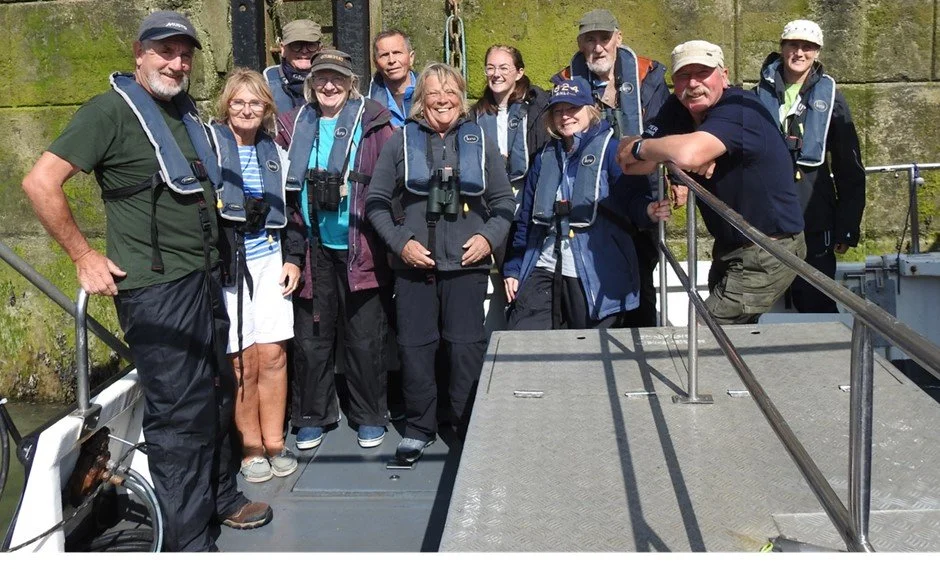
Thank you to every volunteer who has been out surveying for us, processed survey data, analysed results and written reports for us over the last 25 years. Your legacy (excuse the pun) is genuinely a gobsmacking achievement of human endeavour, but more importantly a crucial lifeline for the marine species with whom we share our precious coastline.
For a small charity, every penny counts and makes a big difference, so if you have enjoyed this blog or the exhibition itself, please consider making an affordable donation to support our seal and marine conservation efforts.