Seals on Countryfile
05/11/2021
Giving seals a voice is what we do! So, when the opportunity to share their stories with 5 million TV viewers comes along we jump at the chance. Even so, the responsibility to get the tone and messaging just right for maximum benefit to seals weighs heavily on our shoulders.
Becky Payne attended one of our DEFRA Green Recovery Challenge Fund (GRCF) St Ives Bay Stakeholder Group meetings. Turns out Becky is also a Countryfile researcher and Cornish resident. She first contacted us back in September about a possible story for a programme based in Newlyn. The team hoped to raise awareness about the issue of wildlife disturbance during a COVID related ‘staycation’ summer.
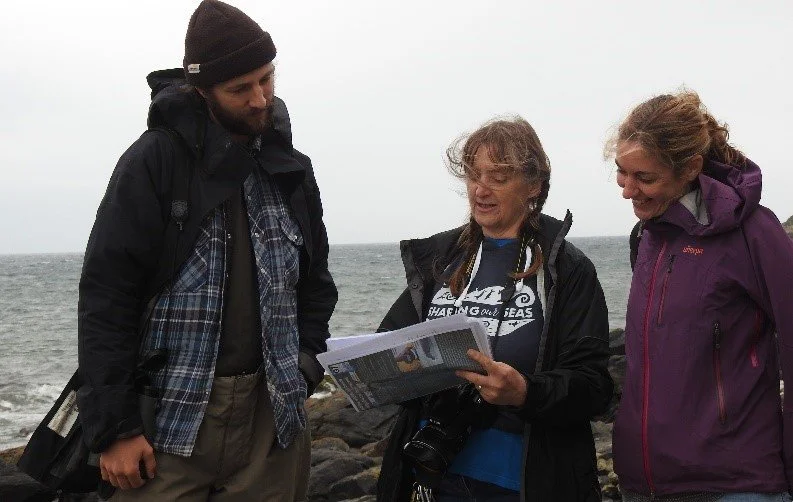
Simon, Sue and Becky - Sensitive seal haul out site
Initially, we sent our usual ‘Guidelines for filming seals’ and ‘Public photo policy’, Seal Alliance resources along with our 2019 reports on seals and human activity. We explained that as a result of our GRCF, we had been able to repeat these surveys between June and August 2021. A plan was hatched to meet Becky and her producer and Director Simon Whitlock. They made a pre visit to assess whether it was possible to film a good segment for Countryfile without giving away the name / location of this sensitive seal site. The answer was yes!
In early October, facilitated by Gurjinder Sandar, we reconvened at a secret location to film as presenter Ellie Harrison joined us on a routine survey. We wanted to reinforce the key messaging we have worked so hard with the Seal Alliance do develop about how to Watch Seals Well. This included:
Understanding that seals will smell you first, hear you second and see you last
Avoiding rocks and beaches that seals need to use, staying on paths and keeping dogs on leads
Being more than 100m away on land, sea and from the air
Moving slowly without stopping (predators do this), constant sound levels and talking in whispers
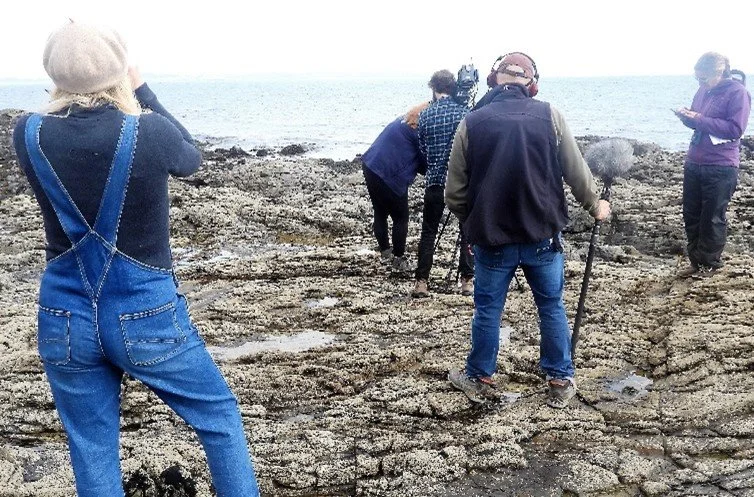
The film crew filming Katie surveying
We thought you might like to see some behind the scenes photos of the film crew at work. Osian Davies was the cameraman supporting Simon to collect seal footage from of the seals and using the drone, whilst Gary Goodhand had the responsibility of recording sound.
Ellie was familiar with the issues of wildlife disturbance and interested to learn more about its impacts on seals. She even took our understanding of the issue forward by saying ‘in the wild every calorie counts and can make the difference between life and death’. This is a great line to add to ‘disturbance is always a waste of energy, often results in injury and can be fatal’.
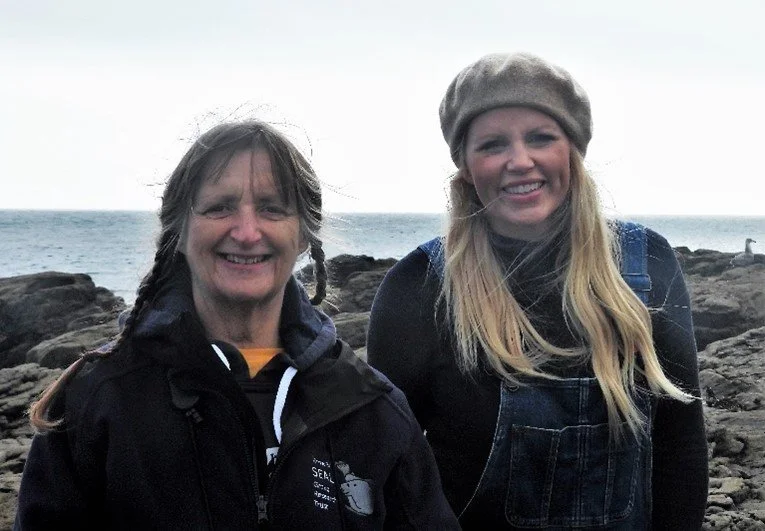
Seal Research Trust Director Sue and Ellie
Editing took place soon after filming and a few fact checking emails later and the segment was ready to go on air. It was great to see our input alongside coverage of Hannah and Duncan from Marine Discovery outlining best ‘at sea’ practice and Jen Parker from the RSPB sharing the good news story of how raising awareness can help a species….the Cornish chough.
To see for yourself, click her to watch the Countryfile episode (seals feature at 36 minutes):
https://www.bbc.co.uk/iplayer/episode/m00116r0/countryfile-newlyn
For access to our key resources on disturbance, follow this link:
https://drive.google.com/drive/folders/1bDh0VfMnOemwFkY6rXVkIfIDVXkwR1dt?usp=sharing
Thank you to everyone at Countryfile for continuing to make great programmes all year round highlighting rural and wildlife issues. We hugely appreciate the time and effort the team put into our segment specifically to best aid our conservation efforts with seals through disturbance mitigation.
We are also hugely grateful to the DEFRA Green Recovery Challenge Fund administered by the National Lottery Heritage Fund for making it possible for us to repeat our 2019 Human Activity and Seal Interactions surveys in 2021 and trail community generated solutions.