All things studenty and sealy!
Written by SRT Research Ranger Milly
Hello readers! Welcome to my blog, about all things studenty and sealy!
Being a student in academia can be hard. All these exterior pressures that feel like they’re never going to go away - you choose subjects, institutions, take exams, get into said institutions, new people, new city, start a course you’ve been dreaming of for many years but… then what?
You must start thinking further. What do I want to do with this? Do I want to work in this industry? What am I interested in? So many questions build, whilst time feels like it’s running out.
I was in this position - doing a marine biology degree which I loved, in the city of Plymouth that was new to me, that I had worked towards for a long time. But I hadn’t thought much further than university itself. So, I decided to take a leap of faith, and push myself to find out what I was truly interested in by taking an industrial placement year. And it was the best thing I could have ever done for myself.
Choosing to take an industrial placement year requires a minimum six-month commitment to internships, volunteering or other positions in the marine industry. But what we did, and when, was completely up to us! Whilst this could be seen as daunting, I embraced it - I wanted to hold myself accountable, get some experience and begin to find my place in the industry (a lot easier said than done, for sure!)
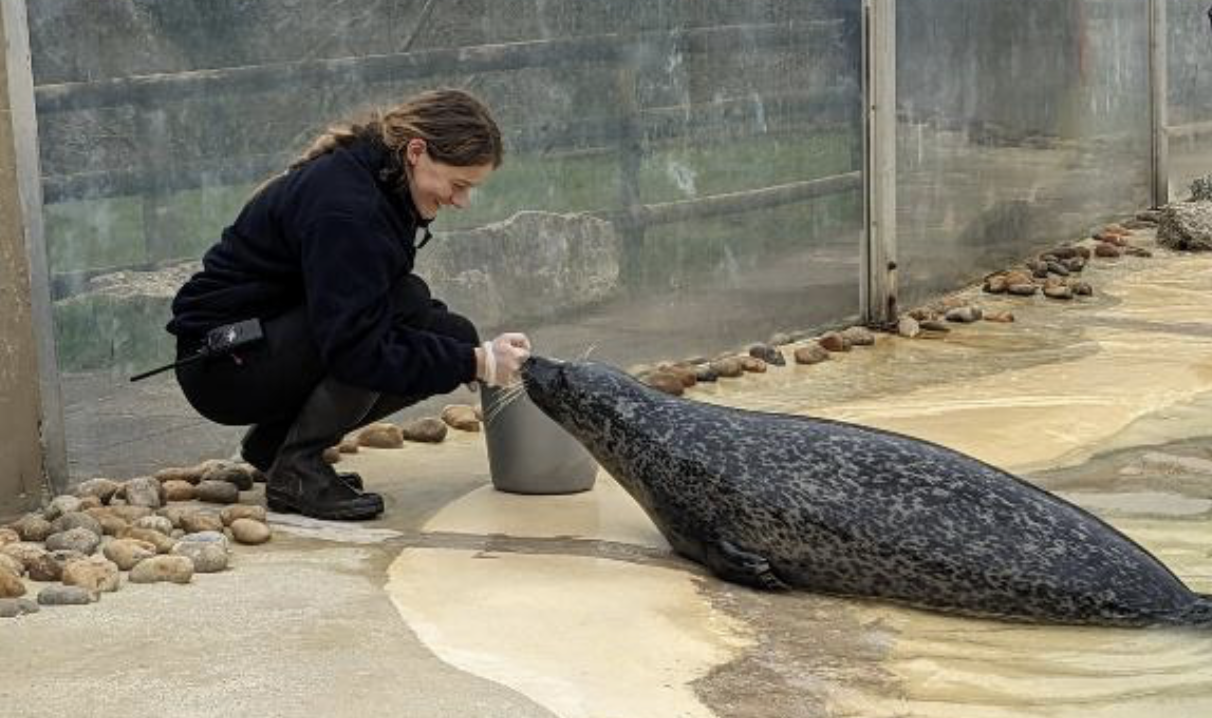
I had only ever seen one wild grey seal in my life before deciding upon a six-month internship at the Cornish Seal Sanctuary (CSS), and this is what drew me to it - it was completely new. I had no particular interest in seals before I moved to Plymouth, embarrassingly… I blame this on growing up abroad! However, I have always loved animals, particularly marine animals and caring for them. So, after being chosen for the internship, I was ecstatic!! I was going to work with seals! I booked onto a British Divers Marine Life Rescue (BDMLR) marine mammal medic course for the next month, and I moved down to Helston to begin my journey with the animal care team and the education/events team at the sanctuary.
Having the privilege of being taught by experts in the field of pinniped care was an absolute dream. Learning about these incredible animals, rescuing and releasing them, educating the public on their conservation and behavioural ecology for six months was an intense, powerful and directional experience which I gained so much from. But then, my final month was approaching and again I found myself wondering… what next?
I absolutely loved working with seals, I had grown such a connection to them through the sanctuary, so I wanted to continue working with them. How though? And with that thought, I decided to change my whole undergraduate dissertation proposal, from corals to seals. Just a minor detail… Let’s just say my supervisor had her hands full with me... Sorry Jenny! The CSS team supported this idea completely, so that’s when I first got in touch with the Seal Research Trust (SRT).
After six months of reading papers, LinkedIn and Instagram posts, leaflets and posters around Cornwall - I finally met Sue! Who was nothing but enthusiastic and supportive about working with me on my undergraduate project, and we became friends quickly! It was decided that CSS, SRT and I would work in collaboration to look at post-release sightings of pups rehabilitated at CSS, using SRT sightings data.
So, after my internship at CSS finished and these plans were in place, I moved home to Hampshire for a couple of months… but found myself missing Cornwall...a lot. So, I went straight back as soon as I could! I rented a room from a lovely lady whom I had never met, I trained as a Cornwall Wildlife Trust Marine Strandings Network volunteer, and for over a month, I spent my days undertaking a PADI Divemaster internship in Falmouth, and my evenings in the SRT office constructing this dataset that would be the backbone of my study.
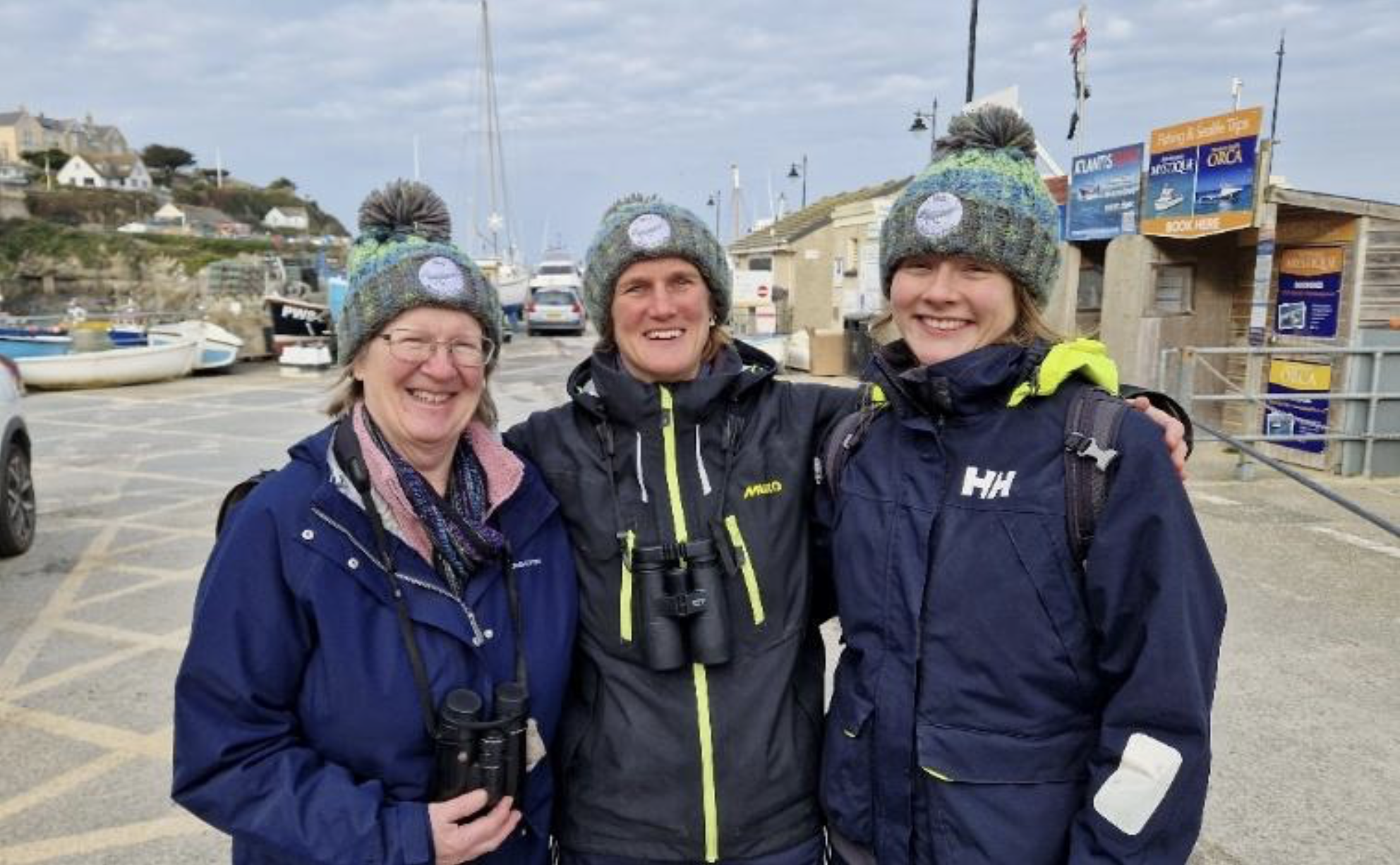
It was from dedicating time to the data collection process that got me hooked on the impactful work of SRT, I began accompanying Sue on weekly surveys, learning how to use photo ID to identify individual seals, ID catalogue creation and attending SRT PIP boat surveys. And I am SO grateful for every single lesson. After over a month of data collection in the SRT office, Sue offered me a position on the Ranger team, as a Research Ranger. Of course, I was delighted to accept and continue to immerse myself into the wonderful world of pinnipeds. Yay!
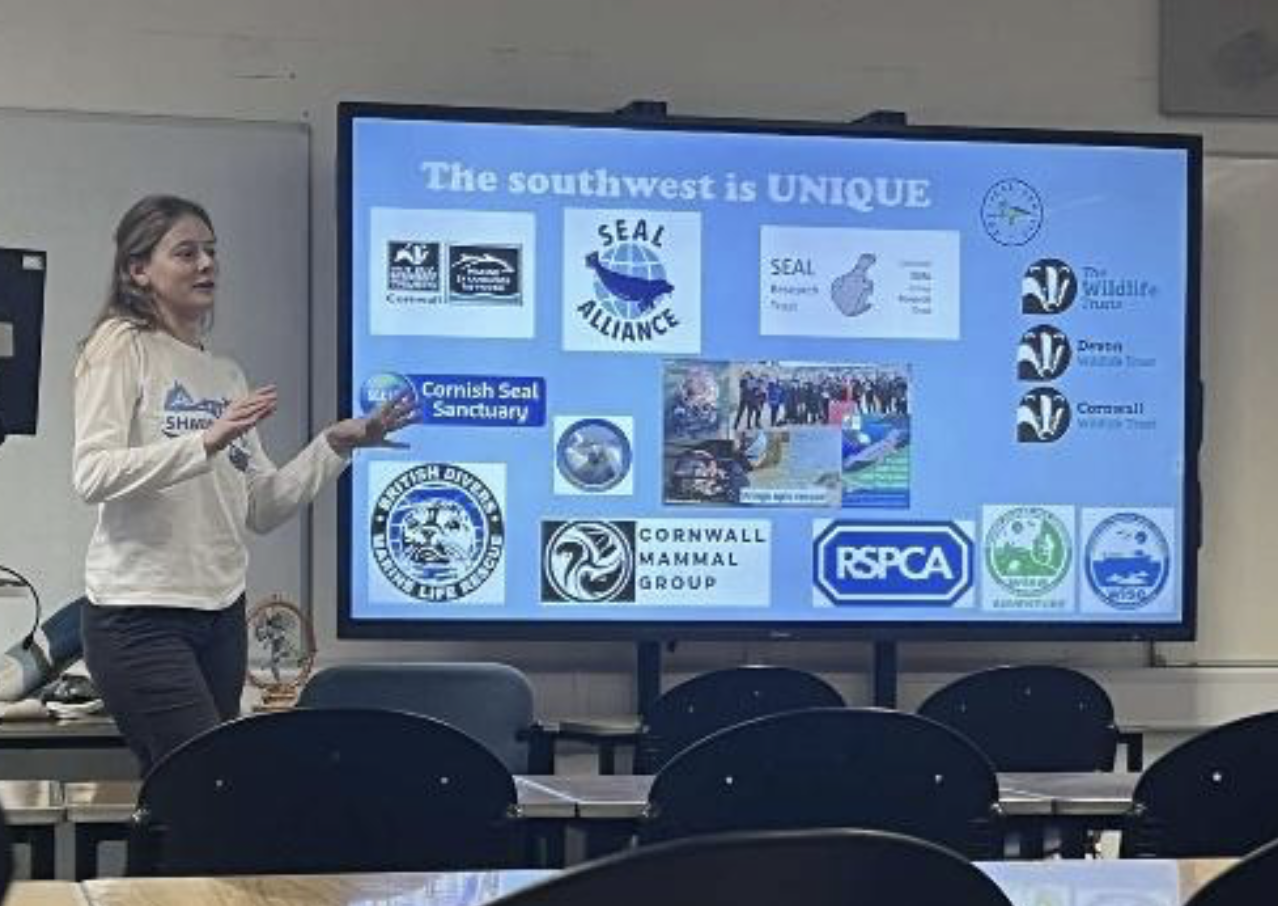
The next year was tough. My final year of university included my undergraduate project, and volunteering with multiple organizations including SRT as much as I could. I was travelling down to Cornwall every other week for surveys, diving, engagement events, talks, beach cleans… anything I could get involved with, I was super keen to make it happen! I also undertook some remote and in person engagement for SRT when I could, with the students of Plymouth Uni societies, and home in Hampshire too with the Wildlife Trust.
It was an incredible year, whilst full on, was without a doubt my most fulfilling. From my placement year I have found a new confidence in myself, and my ability to make things happen. So, whilst challenging in some ways, my final year was easier in others, as I knew myself so much better and had an incredible support system in the form of my home family, and sealy family.
And so… where am I today? Well, I am currently writing to you from Kaikoura, New Zealand, where I am working primarily on a sperm whale research team, alongside leopard seal and NZ fur seal research projects too, whilst still remotely working with SRT and attending as many team events as I can with the time difference! This sperm whale research project continues to develop my survey skills and through that I am learning so much. But I may or may not have the pinniped bug… Even when I see a whale, I still get more excited about the seals! Sorry whales! So, my time away from the whales is spent with the seals.
The skills I gained through my time with CSS, BDMLR, CWTMSN and the skills I continue to gain with SRT are what got me to where I am and will forever be the foundation of wherever my passion leads me next. I couldn’t be more grateful for the opportunities and the guidance from my sealy family.
If you are considering getting involved with the marine network of the southwest, particularly SRT… do it. It was the best decision I ever made.